How to Tell If Your AC Needs More Refrigerant
Is your home or business feeling warmer than it should, even though the AC is running? That uneasy sense that something isn’t quite right can be frustrating. At Brama Cooling, we understand how a struggling air conditioner can disrupt your comfort—and sometimes, the culprit is low refrigerant.
Ignoring the signs can cost you more than just comfort. It could mean higher bills, costly repairs, and even damage to your cooling system. Let’s break down how to spot refrigerant problems, what causes them, and how you can respond safely and effectively.
Why Refrigerant Is Important
Refrigerant is the lifeblood of your air conditioner. It’s like the blood in your veins, circulating through coils and carrying away heat to keep your space cool. Without enough refrigerant, your cooling system can’t do its job—no matter how hard it tries.
But there’s more. The right refrigerant charge ensures your AC runs efficiently. Too little, and the system strains, risking damage to the compressor and driving up your energy bills.
Key points:
- Refrigerant absorbs and releases heat to provide cooling.
- Proper charge is essential for efficiency and longevity.
- EPA regulations require safe handling by certified technicians.
Symptoms of Low Refrigerant
When your AC is running low on refrigerant, it sends out warning signs. Think of these like the dashboard lights in your car—ignore them, and you might end up stranded.
Ice Buildup ❄️
One of the clearest signs? Ice on the refrigerant lines or the evaporator coil. It might seem odd—ice in summer! But low refrigerant causes the coil to get too cold, freezing the condensed moisture and building up frost. If you spot ice, turn off the system and call a professional.
Warm Air From Vents
You expect a blast of cool air. Instead, it’s lukewarm or even warm. This happens because there’s not enough refrigerant to absorb heat from inside your space—so the “cooling” turns into little more than a breeze.
Hissing or Bubbling Sounds
Ever hear a faint hissing or bubbling from your AC? That’s air or refrigerant escaping through a leak. It’s a telltale sign that something’s wrong within the sealed system.
Other Signs
- Longer cooling cycles
- Higher energy bills for the same comfort
- Humidity problems—your AC can’t pull out moisture if it’s low on refrigerant
Causes of Leaks
Refrigerant isn’t a fuel; it doesn’t get “used up.” If your system is low, there’s almost always a leak. But what causes those leaks?
Common Culprits
- Corrosion: Over time, copper coils can corrode, letting refrigerant escape through pinhole leaks.
- Vibration: Normal operation or poor installation can cause joints or connections to loosen.
- Physical Damage: Accidental impacts during renovations or landscaping can puncture lines.
- Factory Defects: Rare, but sometimes a manufacturing flaw causes early leaks.
EPA guidelines require proper leak detection and repair. At Brama Cooling, our EPA-certified technicians use advanced leak detection tools to pinpoint the exact problem—no guesswork.
Quick Safety Checklist
Before you inspect or troubleshoot your AC, remember:
- Never touch frozen or icy components.
- Don’t try to add refrigerant yourself—handling it without certification is both illegal and dangerous.
- Always turn off the AC at the thermostat if you notice ice or unusual sounds.
If you suspect a leak, it’s time to call for AC Repair.
DIY vs. Call a Pro
It might be tempting to handle things yourself—after all, DIY fixes can be satisfying. When it comes to refrigerant, though, it’s a different story.
- DIY: You can check air filters, clear vents, and make sure the thermostat is set correctly. But anything involving refrigerant is off-limits.
- Pro: Only EPA-certified technicians can legally and safely handle refrigerant. We have the tools, training, and protective equipment needed to diagnose and fix leaks.
What Pros Do On Arrival
When a Brama Cooling technician arrives, here’s what you can expect:
- System Inspection: Visual check for ice, oil stains, or obvious leaks.
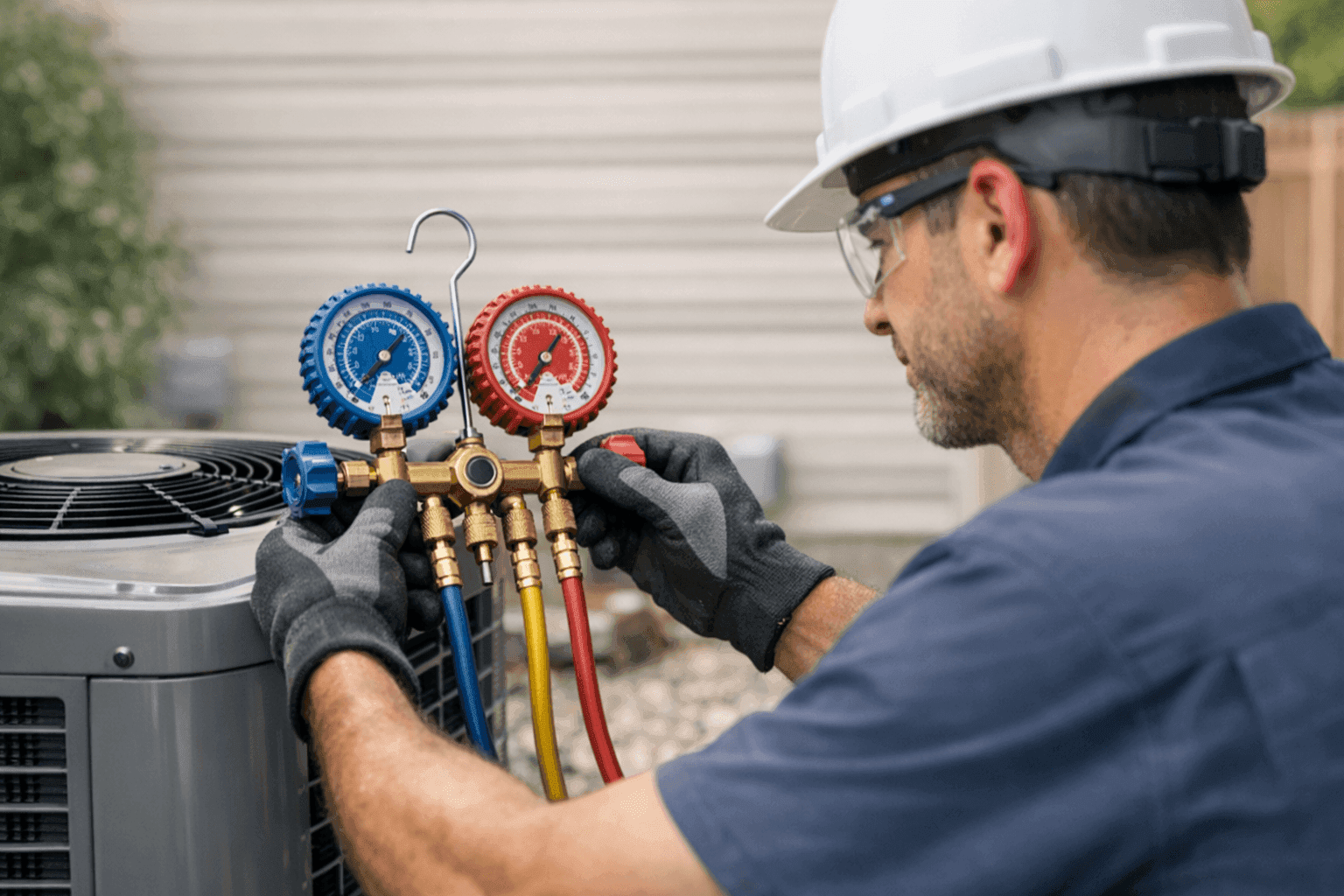
- Pressure Testing: Measuring refrigerant levels with specialized gauges.
- Electronic Leak Detection: Using sensitive equipment to find hidden leaks.
- Repair or Replace: Fixing the leak—sometimes replacing a coil, sometimes a simple connection.
- Recharge: Adding the precise amount of refrigerant, as specified by the manufacturer.
Prevention & Maintenance
You wouldn’t drive your car without an oil change. The same goes for your AC.
- Schedule regular AC Maintenance.
- Have coils and lines checked for corrosion or wear.
- Replace filters regularly to reduce strain on your system.
A well-maintained cooling system is less likely to develop leaks—and more likely to keep you comfortable all year.
Costs & Time Factors
Refrigerant-related repairs can range from a quick fix to a major repair. Factors include:
- Location and size of the leak
- Type and age of your system
- Whether a coil or major part needs replacement
Most repairs take a few hours. But catching the problem early can save you time, money, and headaches.
When It’s an Emergency
Some refrigerant issues can’t wait. If:
- Ice is forming quickly or melting water is pooling near your unit
- You hear a loud hissing or gurgling
- The system stops cooling entirely in the middle of a heat wave
Call us for 24-hour emergency service. We’re here to help, day or night.
Seasonal Considerations
Spring and summer put extra strain on your cooling system. This is when small leaks can turn into big problems. That’s why it’s smart to schedule AC maintenance before the season kicks into high gear.
Common Mistakes
- Topping off refrigerant without fixing leaks. This wastes money and harms the environment.
- Ignoring early signs, hoping they’ll go away. They won’t.
- Using sealants or “leak-stop” additives. These can clog your system and cause more damage.
Signs of Trouble: Recap
Let’s sum it up:
- Ice buildup where it shouldn’t be
- Warm air instead of cool
- Hissing or bubbling noises
- Longer run times and higher bills
If you notice any of these, it’s time to act.
Timeline & Disruption
Most refrigerant repairs can be handled in a single visit. We’ll work to minimize disruption to your home or business, keeping your comfort and schedule in mind.
Materials & Equipment
Our technicians use:
- EPA-approved refrigerant recovery and charging tools
- Electronic leak detectors
- Protective gear for safe handling
We follow all local codes and EPA guidelines for refrigerant service and disposal.
Safe Recharge and Repair
Refrigerant isn’t just cold air in a can. It’s a chemical that requires respect. Only certified professionals—like Brama Cooling’s team—can safely recharge, repair, or replace your AC’s refrigerant system.
We use industry best practices, advanced leak detection, and safe refrigerant handling. That means peace of mind for you, your family, and your customers.
FAQ
Can I just add more refrigerant myself?
No. Only certified technicians can handle refrigerant safely and legally.
Will a leak get worse over time?
Almost always. Even a tiny leak will lead to bigger problems if ignored.
How often should I have my AC checked?
At least once a year. More often if you notice any warning signs.
Are refrigerant leaks dangerous?
They can be. Refrigerant exposure is hazardous, and leaks can lead to system damage.
For more tips on maintaining your cooling system, see our cooling services in Jackson.
Closing Thoughts
Low refrigerant is a silent threat to your comfort—and your wallet. If you notice ice, warm air, or strange sounds from your AC, don’t wait. Your comfort and safety matter.
Call Brama Cooling now — or reach us anytime at 888-840-5035 .