How Air Balancing Can Solve Hot and Cold Spots
Is one room in your home freezing while another feels stifling? Maybe your office lobby is chilly, but the conference room turns into a sauna every afternoon. You’re not imagining things—this is a common frustration, and it can make even the best cooling system seem like it’s working against you.
At Brama Cooling, we know how uneven temperatures can disrupt comfort and productivity. The good news? Hot and cold spots aren’t just something you have to live with. There’s a proven solution: air balancing. Let’s break down how it works, what causes those stubborn temperature swings, and why professional help can make all the difference.
What Causes Uneven Temperatures? 🌡️
Think of your HVAC system like a symphony. Every vent, duct, and register plays a role in delivering comfort. If just one instrument is out of tune, the whole performance falls flat. Here’s why your home or business might feel out of balance:
- Poorly Placed Thermostats: If your thermostat is near a drafty window or heat source, it can misread your whole building’s needs.
- Leaky Ductwork: Even a small gap can let cooled air escape before it reaches the places that need it most.
- Blocked or Closed Registers: Furniture, dust, or accidental closure can choke off airflow to certain rooms.
- Improperly Sized Ducts: If the pipes are too big or too small, air won’t flow evenly, no matter how powerful your system.
- Unbalanced Dampers: Like a steering wheel out of alignment, dampers that aren’t adjusted right send too much air to some spaces and not enough to others.
According to the U.S. Department of Energy, proper duct design and airflow management are critical for both comfort and efficiency. Ignoring these factors means you’re likely paying more for less comfort.
How Air Balancing Works
Air balancing is the art and science of tuning your HVAC system so every room gets just the right amount of cooled (or heated) air. Imagine adjusting the nozzles on a garden sprinkler—some areas need more, some less, but the goal is a lush, even lawn.
Here’s what’s involved:
- Damper Adjustment: Technicians fine-tune the internal “valves” in your ducts, directing more or less air to specific zones.
- Register Placement: Ensuring that supply and return registers are placed and oriented for optimal flow.
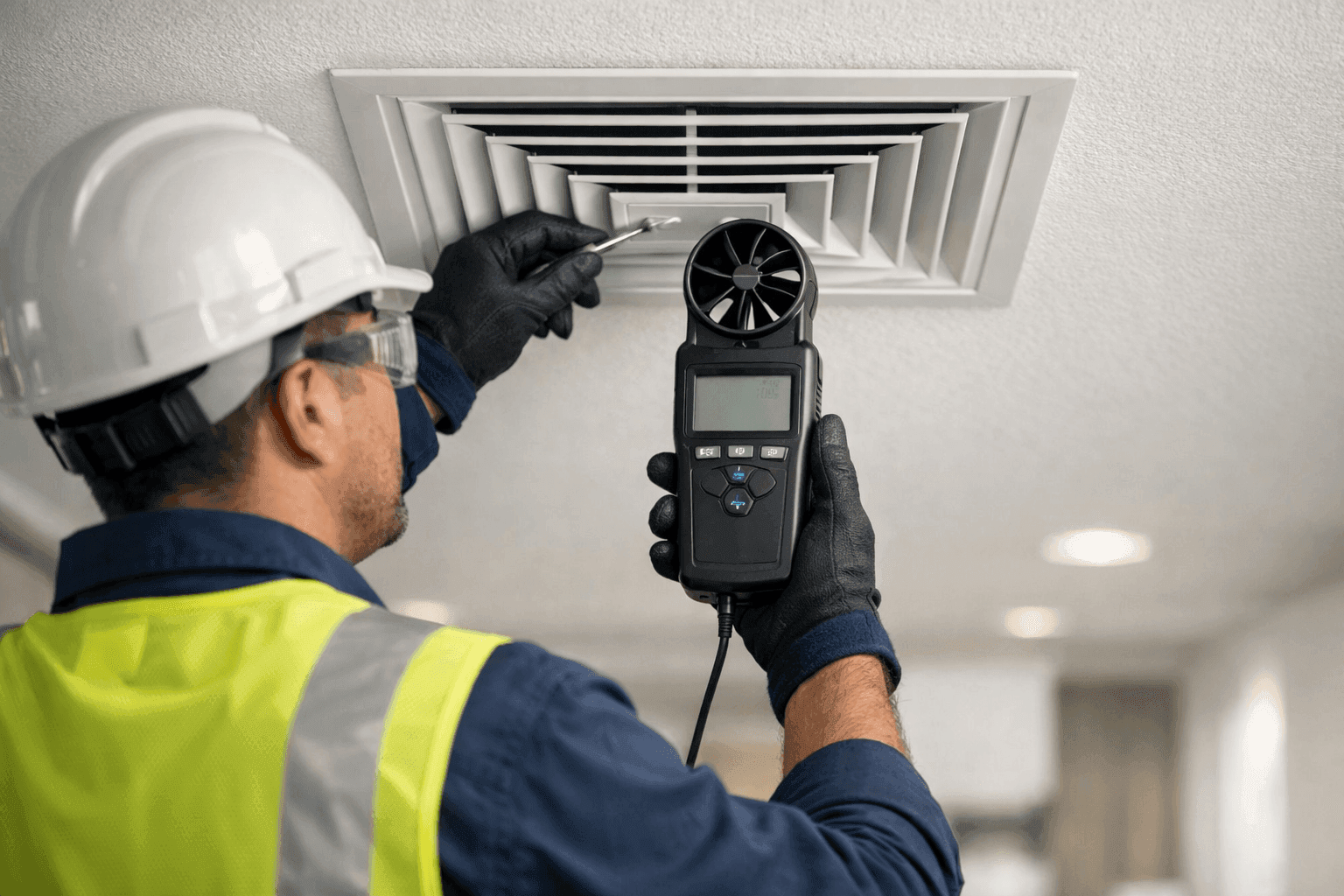
- Duct Leakage Testing: Using calibrated tools—like anemometers and manometers—to find and seal up leaks that waste air.
- Thermostat Calibration: Making sure your thermostat is reading temperatures accurately and communicating with the system as intended.
At Brama Cooling, our technicians use only certified processes and precise instruments, as recommended by ASHRAE (American Society of Heating, Refrigerating and Air-Conditioning Engineers). This isn’t guesswork—it’s a measured approach to comfort.
Signs You Need Balancing
Not sure if air balancing is right for you? Watch for these red flags:
- Persistent Hot or Cold Spots: Some rooms never seem to hit the right temperature.
- Weak Airflow: You barely feel air coming out of certain vents.
- High Energy Bills: You’re spending more but getting less comfort.
- Thermostat Disagreements: The reading on the wall doesn’t match what your body feels.
- Noisy Ducts: Whistling, banging, or rattling noises often mean air is fighting its way through the system.
If any of these sound familiar, it’s time to take a closer look at your system’s balance.
What to Expect from a Professional Balancing Service
When you call Brama Cooling for air balancing, here’s how we approach the job:
- On-Site Assessment: Our certified technicians evaluate your entire cooling system, from the thermostat to the furthest register.
- Instrumented Testing: Using calibrated digital airflow meters, pressure gauges, and smoke pencils, we measure how air moves through your ducts.
- Duct Inspection: We check for leaks, blockages, and insulation gaps.
- Precise Adjustments: Dampers are set, registers repositioned, and any leaks sealed up tight.
- System Re-Test: We measure again to confirm even comfort throughout your property.
You’ll get a clear summary of what was found and fixed—no confusing jargon, just straightforward answers.
Damper Adjustment: Fine-Tuning for Comfort
Dampers are like traffic cops for your ductwork. They direct the flow of cooled air to where it’s needed most. But if they’re stuck, missing, or misaligned, some rooms get a traffic jam while others are a ghost town.
A pro from Brama Cooling will:
- Locate manual or automatic dampers in your system.
- Adjust each one based on real airflow numbers, not guesswork.
- Make small tweaks over several cycles to get perfect balance.
It’s a step that’s often overlooked during installation or renovation—but it makes a world of difference.
Register Placement: Small Changes, Big Impact
Where your vents “breathe” matters. Registers blocked by rugs, furniture, or even heavy curtains can suffocate your airflow and create uneven temperatures.
- Keep registers clear: Don’t stack boxes or furniture in front of them.
- Check for dust: Clean supply and return grilles regularly.
- Adjust direction: Aim adjustable vents toward open areas, not corners or walls.
Sometimes, even relocating a register or adding a return can dramatically improve balance, especially in older homes or buildings with tricky layouts.
Duct Leakage: The Silent Culprit
Think of duct leaks like tiny holes in a straw. No matter how hard you sip, you’re losing precious cooling power along the way.
Brama Cooling’s certified technicians:
- Perform smoke or pressure tests to reveal hidden leaks.
- Use safe, code-approved sealants (as recommended by ENERGY STAR).
- Re-inspect to make sure every fix holds.
Sealing ducts not only boosts comfort but also slashes wasted energy—a win-win for your wallet and the environment.
DIY vs. Call a Pro
You can certainly check for obvious issues—like closed vents or blocked returns. But professional air balancing is more like tuning a piano than changing a lightbulb. It requires specialized tools, training, and an understanding of airflow physics.
DIY methods often miss hidden leaks or deeper system flaws. A certified technician brings calibrated equipment and years of hands-on experience. That’s why Ventallation and air balancing go hand in hand for lasting results.
Quick Safety Checklist
Before any air balancing work, review these basics:
- Make sure ladders and tools are used safely—never stand on furniture.
- If you detect mold, unusual odors, or visible water damage in ducts, call a pro immediately.
- All work should meet local code requirements and manufacturer recommendations.
Refer to the National Air Duct Cleaners Association (NADCA) and ASHRAE guidelines for best safety practices.
Common Mistakes That Sabotage Comfort
Even well-meaning efforts can backfire. Watch out for these:
- Closing too many vents: This can increase pressure and damage your blower.
- Using the wrong filters: Low-quality or clogged filters restrict airflow.
- Ignoring insulation: Poorly insulated ducts can lose cooled air before it arrives.
- Skipping maintenance: Dust and debris build up over time, choking your system.
Regular checkups help prevent these issues from sneaking up on you.
How Long Does Air Balancing Take?
Most residential jobs can be completed in a few hours. Large commercial spaces might take a day or more, depending on complexity. Our goal is minimal disruption—no tearing down walls or major demolition required.
You’ll notice the difference right away: rooms that feel just right, no matter where you are in the building.
Preventing Hot and Cold Spots Year-Round
A little prevention goes a long way. Here’s how to keep your system balanced:
- Schedule annual HVAC maintenance with Brama Cooling.
- Change filters every 1–3 months.
- Keep supply and return registers free from obstructions.
- Ask about a home energy audit to spot hidden efficiency losses.
- Upgrade thermostats for more accurate temperature control—search for "Thermostats near you" for the best options.
When It’s an Emergency
If you notice rapid temperature swings, persistent humidity, or your system is constantly running without relief, don’t wait. This could signal a major airflow problem, a failing component, or unsafe conditions. Our 24-hour emergency service means help is always close by.
Costs & Value
Air balancing is an investment in comfort and efficiency. The cost varies based on system size and complexity, but it often pays for itself in lower energy bills and fewer repairs down the line. If you’re in the area, our cooling company is ready to help get you back to even, reliable comfort.
Frequently Asked Questions
Q: Will I need new equipment for air balancing?
A: Usually not. Most solutions involve adjusting, sealing, or cleaning what you already have.
Q: How often should I get my system checked?
A: At least once a year—ideally before cooling season kicks in.
Q: What if I have both hot and cold spots?
A: That’s the perfect time for a professional assessment. Often, a few targeted adjustments make a dramatic difference.
Q: Is this covered by code?
A: Most states follow International Mechanical Code (IMC) and local amendments. All our work meets or exceeds these standards for safety and performance.
The Bottom Line: Even Comfort Is Possible
Air balancing isn’t magic. It’s the careful, professional adjustment of your system so every room feels just right. At Brama Cooling, our certified technicians use advanced tools and proven techniques to eliminate hot and cold spots for good.
Ready to feel the difference? Let’s bring comfort back into balance—one room at a time.
Call Brama Cooling now — or reach us anytime at 888-840-5035 .