How Air Balancing Improves Comfort & Cuts Costs
Everyone knows the feeling. One room is freezing, another feels like a greenhouse, and the thermostat seems to be playing a cruel joke. Whether you own your home or manage a busy office, uneven temperatures can make comfort seem impossible—and those high-energy bills only add to the sting.
At Brama Cooling, we see it every day. The cause? Often, it’s not your air conditioner or furnace—it’s unbalanced airflow. Let’s break down how professional air balancing leads to steady comfort, happier occupants, and savings that show up on your next utility bill.
What Is Air Balancing? 🌬️
Air balancing is the process of adjusting your heating and cooling system to ensure air is distributed evenly to every room. Think of your HVAC like a set of lungs: if some airways are blocked or restricted, you can’t breathe easily. Similarly, blocked or uneven air paths in your ductwork mean certain rooms get too much or too little air.
By measuring and tweaking airflow, professionals make sure no part of your home or business is left out in the cold (or heat). The result? Even temperatures and a system that doesn’t have to work overtime.
Signs You Need Air Balancing
Wondering if your space needs air balancing? Here are some telltale signs:
- Hot or cold spots in certain rooms
- Weak airflow from some vents
- Doors slamming shut when the HVAC turns on
- High utility bills despite a newer system
- Dust buildup around vents and registers
- Occupants complaining of discomfort
If you notice any of these, it’s time to look beyond the thermostat. Unbalanced airflow is often the culprit behind persistent comfort problems.
The Process Explained
So, what actually happens during a professional air balancing service? The steps are methodical—no guesswork involved.
-
Initial Assessment:
A technician interviews you about comfort issues and inspects your system—filters, ducts, thermostats, and vents. -
Measuring Airflow:
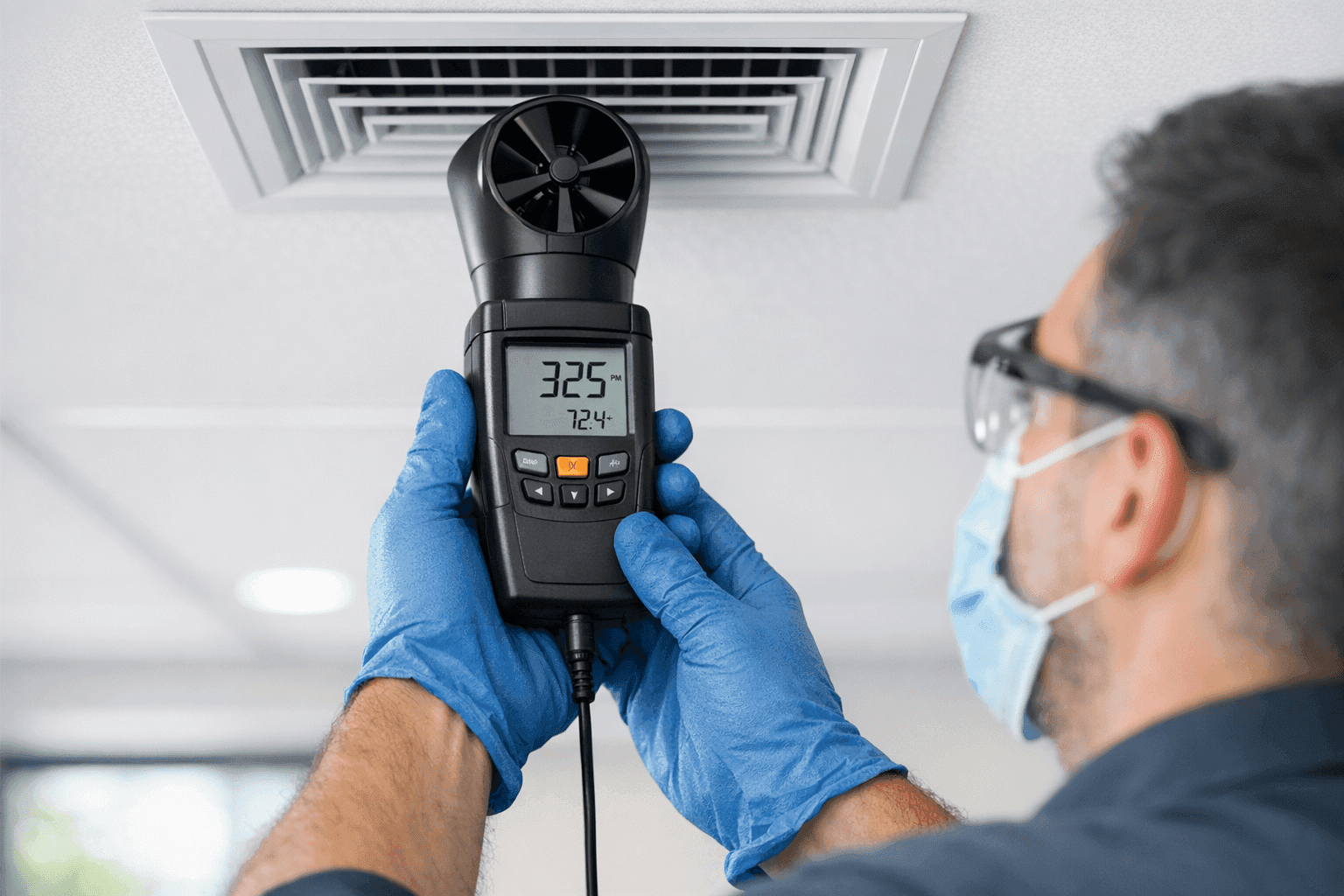
Using precision tools like anemometers and manometers, we measure how much air is coming from each vent and compare it to design specifications (ASHRAE Standard 111 is a common guideline). -
Adjustments:
Dampers inside ductwork are fine-tuned to increase or reduce airflow as needed. Sometimes, duct modifications or sealing are recommended. -
System Testing:
The technician checks temperatures and airflow again, making sure every room matches set targets. -
Final Walkthrough:
Before leaving, we explain the changes and what you can expect going forward.
Professional Tools & Expertise
Air balancing isn’t a DIY job. It takes more than a screwdriver and a good guess. Some of the professional tools used include:
- Airflow hoods (to measure volume from each vent)
- Anemometers (for precise air speed)
- Manometers (for pressure readings)
- Temperature sensors
Licensed HVAC technicians are also trained to spot code or safety violations, such as poorly supported ductwork or blocked returns. Following guidelines from the Air Conditioning Contractors of America (ACCA) ensures safety and performance.
Benefits for Homes & Businesses
Why invest in air balancing? The rewards are immediate and long-term:
- Even Temperatures: No more fighting over the thermostat.
- Lower Energy Bills: Balanced airflow means your system runs less often and more efficiently.
- Longer HVAC Life: Less strain equals fewer repairs and a longer lifespan for your equipment.
- Improved Air Quality: Better airflow helps your filters trap more dust and pollen.
- Quieter Operation: No more whistling vents or slamming doors.
For commercial spaces, balanced air also means happier tenants or employees, better productivity, and compliance with building codes.
Common Problems That Cause Imbalance
Sometimes the issue is obvious—like a closed vent. Other times, it’s hidden:
- Crushed or kinked ducts
- Dirty filters or coils
- Leaky ductwork
- Poorly sized or installed systems
- Blocked returns (furniture or clutter)
Regular HVAC Maintenance can catch these problems before they get worse.
Quick Safety Checklist Before You Start
While the pros handle technical work, you can do a quick safety scan:
- Make sure vents and returns aren’t blocked by furniture
- Replace dirty filters every 1–3 months
- Listen for odd noises from your system
- Check for visible leaks or disconnected ducts
If you spot anything, call in a licensed technician.
DIY vs. Call a Pro
Some fixes—like opening a blocked vent—are simple. But most air balancing is best left to professionals. Why?
- Specialized tools are required
- Duct adjustments can affect indoor air quality and safety
- Incorrect balancing can damage your HVAC system
If your comfort issues persist after basic checks, it’s time for a professional assessment.
What to Expect During a Service Visit
A typical air balancing visit takes between 2–4 hours, depending on the size and complexity of your system. There’s minimal disruption: we’ll need access to your vents, thermostat, and sometimes attic or basement.
You’ll get a clear report of what was measured, what was adjusted, and recommendations for future maintenance.
Costs & Time Factors
Air balancing is an investment that pays for itself. Costs vary depending on the size of your home or business, the number of vents, and whether duct modifications are needed. In most cases, the energy savings and comfort improvements quickly outweigh the upfront cost.
When It’s an Emergency
If you notice very weak airflow, strange odors, or your system running constantly without cooling or heating effectively, it could be more than just an imbalance. Shut off your system and call for Air Balancing if you suspect a serious fault.
Prevention & Maintenance
Like changing your oil, regular maintenance prevents bigger problems. Schedule annual HVAC Maintenance and include an airflow check. This ensures early detection of issues—before they become pricey headaches.
Seasonal Considerations
Spring and fall are ideal times to schedule air balancing. Before the hottest or coldest weather arrives, your system will be ready to perform at its best.
Common Mistakes to Avoid
- Closing vents in unused rooms (can increase pressure and damage ducts)
- Ignoring small comfort issues until they become major
- Using cheap, restrictive filters that limit airflow
Simple awareness can prevent costly repairs down the road.
Frequently Asked Questions
How often should air balancing be done?
Once after major renovations, system upgrades, or if you notice comfort changes. Otherwise, every few years is typical.
Is it worth it for older homes?
Absolutely. Older ductwork often needs the most help to deliver even temperatures.
Can air balancing help with allergies?
Yes—better airflow and filtration mean less dust and pollen circulating indoors.
Air Balancing in Every Season
Don’t let uneven temperatures or high bills become the “new normal.” Professional air balancing is a smart, proven way to make every room feel just right—while saving money and extending the life of your heating and cooling system.
If you’re looking for reliable cooling services Brama Cooling is here to help—whether it’s your home, office, or anywhere comfort matters.
Call Brama Cooling now — or reach us anytime at 888-840-5035 .