How to Prevent Costly Generator Repairs with Routine Care
When the lights go out, your generator stands between you and hours of waiting in the dark. It’s your safety net—at home, or for your business. But all too often, generators fail just when you need them most. We see it all the time at Brama Cooling: a little prevention could have kept things running smoothly.
Ignoring basic maintenance is like driving your car for years without ever changing the oil. Small problems turn into big ones. And those big ones often mean big repair bills. Whether you’re responsible for a busy office or just want peace of mind at home, understanding routine generator care is crucial.
Why Generators Fail ⚡
No one expects their generator to quit on them. But it happens. Why? Most failures come down to a few common issues:
- Neglected oil changes: Think of oil as your generator’s lifeblood. When it gets old or dirty, parts grind and wear down.
- Weak battery: Just like your car, a generator needs a healthy battery to start up. Batteries degrade over time, especially in extreme temperatures.
- Fuel problems: Stale or contaminated fuel can clog filters and starve the engine.
- Overloading: Plugging in too much at once can trip the system or even fry sensitive components.
- Lack of regular testing: If you don’t check your generator now and then, you won’t spot trouble before it starts.
The National Fire Protection Association (NFPA 110) and many manufacturers stress the importance of routine checks to avoid emergencies and unsafe conditions.
Routine Maintenance Musts
Routine care doesn’t have to be complicated. It’s about paying attention to the small things before they become big headaches.
Oil Changes: Your Generator’s Lifeline
Check the oil every time you run your generator for more than a few hours. Follow your manufacturer’s recommended oil change interval—usually every 100 to 200 hours of use, or at least once a year. Skipping this can lead to engine damage that’s both expensive and time-consuming to fix.
- Use only the oil grade listed in your manual.
- Always replace the oil filter when you change the oil.
- Wipe away spills to prevent dust and grime buildup.
Battery Care: Avoiding a Dead Start
A generator’s battery needs regular attention. Corroded terminals or low charge can leave you powerless just when you need backup most.
- Inspect battery terminals for corrosion and clean as needed.
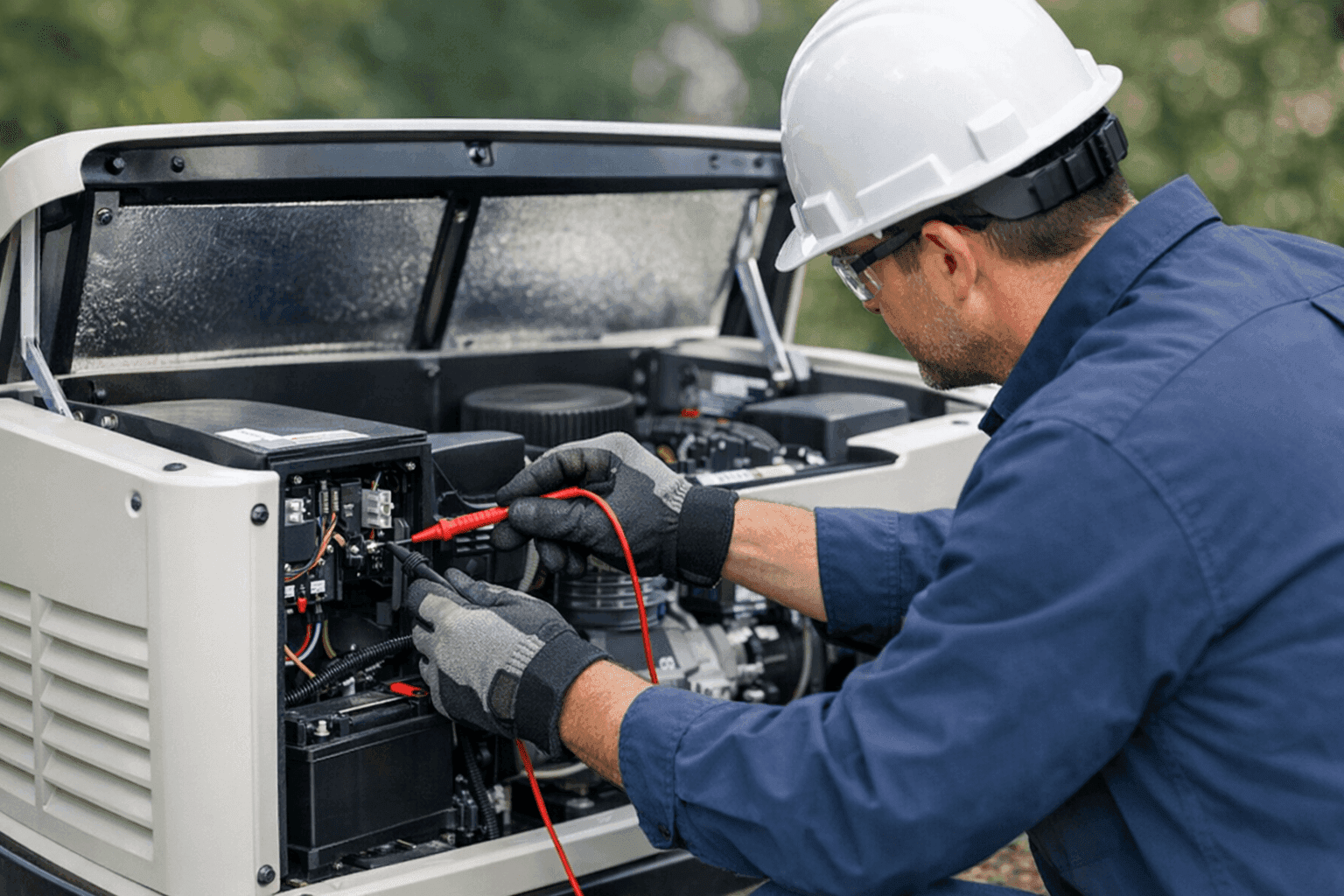
- Test the battery’s voltage with a multimeter every few months.
- Replace the battery every 2-3 years, or sooner if it struggles to hold a charge.
Load Tests: Proving Your Power
A load test means running your generator with real-world demand—just like it would see in an actual outage. This helps ensure everything works under pressure.
- Schedule a full load test at least once a year.
- Watch for odd noises, smoke, or warning lights.
- If something doesn’t seem right, call a professional before your next storm.
Keep It Clean
Dust, leaves, and debris can clog air intakes or block cooling fans. Clean around your generator regularly, especially after storms or during pollen season.
Signs of Trouble to Watch For 👀
Generators rarely fail without warning. Look out for these red flags:
- Unusual noises: Squeals, rattles, or loud knocking sounds
- Frequent stalling or hard starts: Especially when the weather turns
- Excessive smoke: White, blue, or black smoke can signal serious engine trouble
- Warning lights or error codes: Don’t ignore that blinking panel!
- Fuel or oil leaks: Puddles or drips under your generator aren’t normal
If you spot any of these, don’t wait. It’s time for a professional check.
When to Upgrade Parts
Some parts just don’t last forever. Manufacturers and experienced technicians recommend replacing:
- Oil and air filters: At every oil change, or more often in dusty environments
- Spark plugs: Every 2-3 years, or as soon as you notice trouble starting
- Belts and hoses: Inspect annually and replace at the first sign of wear
Upgrading parts on schedule prevents breakdowns and keeps your generator humming.
Quick Safety Checklist
Before you do any maintenance, safety comes first:
- Turn off the generator and let it cool completely.
- Disconnect the battery to prevent accidental starts.
- Wear gloves and eye protection, especially when handling oil or batteries.
- Always follow your manufacturer’s manual for specific instructions.
DIY vs. Call a Pro
There’s plenty you can do yourself—like checking oil or cleaning terminals. But some jobs are safer for trained technicians:
- Diagnosing electrical or fuel system issues
- Performing load bank testing
- Replacing complex internal parts
If you’re unsure, it’s better to call for help than to risk a bigger problem.
What Pros Do On Arrival
When you schedule Generator Maintenance with Brama Cooling, here’s what to expect:
- Visual inspection for leaks, corrosion, and wear
- Oil, filter, and battery checks
- Load testing to verify real-world performance
- Review of control panels and safety systems
- Recommendations for any needed repairs or upgrades
This thorough approach follows guidelines from the Electrical Generating Systems Association (EGSA) and leading equipment manufacturers.
Prevention & Maintenance: Saving Money, Avoiding Headaches
Routine generator care doesn’t just save you from big repair bills. It also:
- Extends your generator’s lifespan
- Reduces the risk of unexpected outages
- Keeps your warranty valid
- Gives you confidence in every blackout
For both homes and businesses, a little prevention is worth a lot of peace of mind.
Costs & Time Factors
How much does routine maintenance cost? It’s usually much less than a major repair—or the cost of lost business during an outage. Most appointments take under an hour. Replacing a neglected generator, on the other hand, can run into the thousands and take days or weeks.
When It’s an Emergency
If your generator won’t start during an outage, don’t panic. First, check the basics: is there fuel, and is the battery charged? If not, call for Generator Maintenance. Never try to repair major electrical faults yourself.
FAQ: Smart Generator Care
How often should I run my generator for testing?
Most manufacturers suggest running your standby generator for 30 minutes once a month.
Can I use regular automotive oil?
No. Always use oil recommended by your generator’s manufacturer.
Should I try to fix electrical issues myself?
Electrical repairs can be dangerous. Leave these to licensed technicians.
Seasonal Considerations
Winter cold drains batteries and thickens oil. Summer storms bring extra wear. Before each season’s peak, schedule a checkup. This is especially important for businesses relying on smooth operations year-round.
Common Mistakes
- Ignoring the user manual
- Skipping regular oil changes and battery checks
- Letting debris pile up around the generator
- Waiting until something breaks to call for help
Don’t let these simple errors turn into expensive disasters.
Timeline & Disruption
Routine maintenance is quick and minimally disruptive. Most visits are done in under an hour. Unexpected repairs or replacements, though, can drag on and impact your home or business.
Materials/Equipment Needed
- Manufacturer-approved oil and filters
- Clean rags and gloves
- Battery tester or multimeter
- Safety glasses
- Replacement spark plugs (if needed)
Always double-check your generator manual for specific part numbers and instructions.
How Brama Cooling Keeps Your Power Reliable
At Brama Cooling, our technicians stay current with the latest safety codes and manufacturer guidelines. We’re thorough, careful, and committed to keeping your home or business running—no matter what the weather brings. If you’re in need of Generator Installation or routine care, or if you’re looking for cooling services from trusted professionals, our team is ready to help.
For those in the area searching for reliable Generator Installation or expert cooling, you’re in good hands with Brama Cooling.
Call Brama Cooling now — or reach us anytime at 888-840-5035 .