Whole-House Fans: Efficient Cooling for Any Season
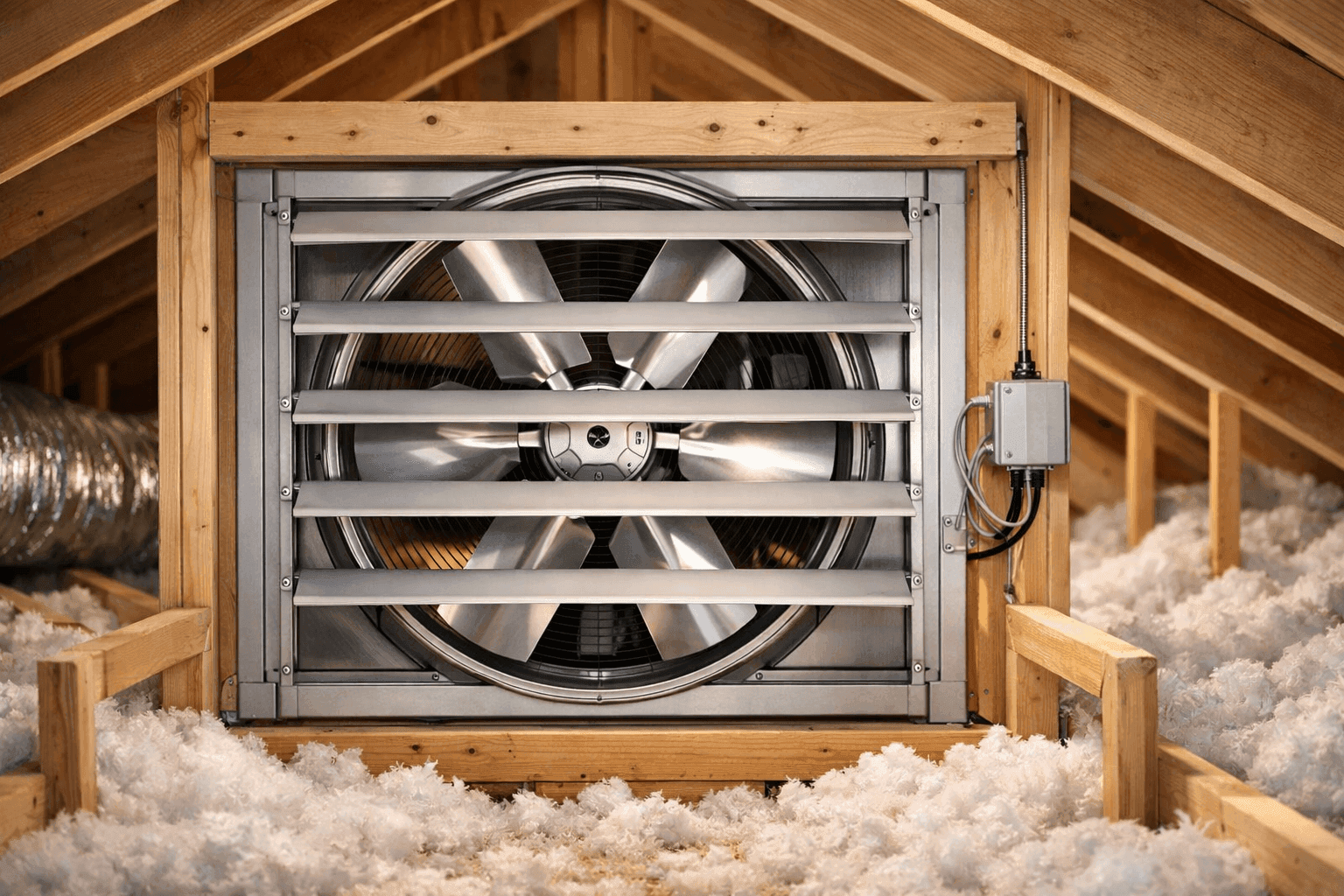
If you’ve ever walked into a stuffy room and wished you could sweep away the heat in a single breath, you’re not alone. Sweltering summers and unpredictable shoulder seasons can make both homes and businesses uncomfortable—fast. At Brama Cooling, we’ve seen how a simple solution, like a whole-house fan, can transform your space. Efficiently. Reliably. Economically.
Rising energy costs make it more important than ever to choose the right cooling system for your needs. Whole-house fans offer an alternative that’s easy to overlook—but for many, they’re the missing piece. Let’s crack open the attic hatch and see how these fans really work.
How Whole-House Fans Operate 🌀
A whole-house fan isn’t your average ceiling fan. Picture a giant, quiet fan installed in your attic floor or ceiling. When you switch it on, it draws cooler outside air in through your windows and pushes hot, stale air out through attic vents. It’s like opening all your doors and windows at once, but with power and purpose.
- Airflow matters: The fan pulls in fresh air and sends old air packing, replacing the atmosphere in your home in minutes.
- Timing is key: Run it during cooler hours—early morning or late evening—to maximize results.
- Works with nature: Instead of fighting outdoor temperatures, you let natural cool air do the heavy lifting.
According to the U.S. Department of Energy, whole-house fans can cool a home for a fraction of what it costs to run central air conditioning. They’re a perfect partner for energy-conscious property owners.
Key Advantages Over Traditional AC
So why choose a whole-house fan instead of just cranking up the AC? The benefits stack up quickly:
- Lower energy bills: Fans use much less electricity than traditional air conditioning.
- Fast cooling: They can clear out heat in just minutes—ideal for quick relief after a hot day.
- Improved air quality: By constantly refreshing indoor air, they help reduce pollutants and odors.
- Gentle on the environment: Uses less energy, so you’re shrinking your carbon footprint.
For both homeowners and business managers, this means comfort that doesn’t break the bank—or the planet.
When Whole-House Fans Make Sense
Whole-house fans don’t replace your AC, but they’re a smart choice in many situations:
- Mild climates: Where nights cool off, fans can handle most of your cooling needs.
- Day-to-night swings: If your location cools down after sunset, fans give you control without the compressor kicking in.
- Transitional seasons: Spring and fall can be unpredictable. A whole-house fan brings in fresh air without switching on the furnace or AC.
In areas with muggy, hot nights, you’ll still need AC backup. But for much of the year, a fan can do the heavy lifting.
Installation Considerations: What to Know Before You Buy
Whole-house fans are powerful tools, but they’re not plug-and-play for every building. Before you commit, keep these factors in mind:
- Attic space: You’ll need enough room for the fan and proper venting.
- Electrical safety: A licensed electrician must handle the wiring—safety codes matter.
- Ventilation requirements: Without enough attic exhaust vents, your system won’t work efficiently.
- Noise levels: Modern fans are quiet, but placement and insulation affect sound.
It’s smart to consult with a cooling contractor who understands both residential and commercial needs. At Brama Cooling, we evaluate each building’s layout and airflow to ensure the fan will deliver.
What Happens During Professional Installation
Curious about the process? Here’s what you can expect from a professional install:
- Site assessment: Measuring attic space, checking for obstructions, and evaluating current ventallation.
- Sizing the fan: Bigger isn’t always better—a unit matched to your square footage works best.
- Safe wiring: Electricians install dedicated circuits and switches, following National Electrical Code (NEC) guidelines.
- Sealing and insulation: Proper sealing around the fan prevents unwanted air leaks and keeps your system efficient.
- Testing airflow: Final checks make sure the fan runs smoothly and quietly.
A typical installation wraps up in a day, with minimal disruption.
Seasonal Tips for Smart Use
Whole-house fans shine when used strategically. Here’s how to get the most out of yours, year-round:
- Open windows: Always open a few windows before switching the fan on. This prevents negative air pressure and pulls in cool outdoor air.
- Run at the right time: Early morning and late evening are best, when outside temps are lower.
- Pair with thermostats near you: Smart thermostats help you monitor temperatures and know when to switch between fan and AC.
- Winter prep: In cold seasons, cover the fan with an insulated cap to keep heat from escaping.
A little planning stretches your comfort—and your dollar.
Maintenance Needs: Keeping Your Fan at Its Best 🛠️
Like any hardworking appliance, whole-house fans need attention to stay efficient and safe:
- Dust and debris: Check and clean the fan blades and housing every few months.
- Electrical checks: Inspect wiring annually for signs of wear, especially before peak cooling season.
- Attic vent cleaning: Ensure attic vents are clear—blockages reduce efficiency and can cause overheating.
- Listen for noise: New sounds can mean loose parts or imbalance.
Professional tune-ups, like those offered in our HVAC Maintenance service, help extend the life of your system.
DIY vs. Call a Pro: What’s Safe to Handle?
Some tasks you can tackle yourself:
- Wiping down fan blades
- Checking for obvious blockages
- Listening for unusual sounds
But when it comes to wiring, vent installation, or troubleshooting electrical faults, always call a licensed pro. Safety codes exist for a reason.
Common Mistakes to Avoid
It’s easy to overlook the basics. Don’t make these missteps:
- Running the fan with windows closed: This can create dangerous pressure and backdrafts, especially if you have gas appliances.
- Ignoring attic vent sizing: Too little exhaust space chokes airflow and strains the motor.
- Skipping maintenance: Dust buildup can reduce efficiency and even become a fire hazard.
If you’re unsure, reach out for advice from a cooling company that knows the ins and outs.
Whole-House Fans and Indoor Air Quality
Beyond cooling, whole-house fans can play a role in improving indoor air quality (IAQ):
- Reduces VOCs: Quickly removes indoor air pollutants, like cooking fumes or cleaning odors.
- Helps with allergies: Regular airflow can lessen dust and pollen buildup.
- Pairs with air scrubbers: For even healthier air, consider combining your fan with air scrubbers.
For businesses, this can mean happier, more productive employees.
Energy Savings: Crunching the Numbers
Running a whole-house fan typically costs pennies per hour. Compare this to the dollars-per-hour cost of central AC, and the savings are obvious. According to ENERGY STAR, homes can cut cooling costs by up to 50% by using whole-house fans strategically.
- Lower monthly bills
- Less strain on your AC
- Longer lifespan for all cooling equipment
It’s a smart investment that pays off—season after season.
When to Use Whole-House Fans vs. AC
It’s not always either/or. Here’s a simple guide:
- Use the fan: When outside air is cooler than indoors, typically mornings/evenings or mild days.
- Switch to AC: When humidity is high, or outdoor air is hotter than your desired indoor temp.
- Together: Run the fan first to flush out heat, then switch to AC for finishing touches.
This tag-team approach boosts comfort and efficiency.
Quick Safety Checklist for Homeowners and Businesses
Safety first—always. Before running your fan:
- Open windows in every occupied room.
- Check attic vents for clear airflow.
- Make sure smoke and carbon monoxide detectors are working.
- Never run the fan if outdoor air quality is poor (smoke, pollen, high pollution).
For commercial properties, coordinate with your facilities team to ensure proper ventallation and safe operation.
Signs Your Fan Needs Attention
Watch for these red flags:
- Excessive vibration or new noises
- Weak airflow despite open windows and vents
- Strange smells (burning, musty)
- Difficulty starting or stopping
Any of these warrant a call to your trusted cooling specialists.
Costs, Timeline & Potential Disruption
A professionally installed whole-house fan usually costs less than a new AC unit. Most projects wrap up in one day, with minimal mess. Some older homes may need electrical upgrades or extra venting—your installer should walk you through any expected changes.
Plan for a little attic access, some cleanup, and a big bump in comfort.
Whole-House Fans: Not Just for Homes
Businesses, schools, and community spaces can all benefit from whole-house fans. They’re especially valuable in buildings with:
- Large open areas
- High daytime occupancy
- Existing ventallation systems ready for upgrades
For more on commercial applications, see our Ventallation service page.
Frequently Asked Questions
Are whole-house fans loud?
Modern models are much quieter than older ones. Placement and insulation make a big difference.
Do fans work in humid climates?
They’re less effective when it’s hot and muggy outside, but can still help in mornings and evenings.
Can I use a whole-house fan with air conditioning?
Yes—use the fan to cool quickly, then switch to AC as needed.
Is installation disruptive?
Usually, it’s a one-day job with minimal mess.
Local Cooling Services You Can Rely On
Whether you’re a homeowner or manage a commercial space, Brama Cooling is here to help. Our team understands the balance between comfort, efficiency, and safety. If you’re curious about whole-house fans or want to explore other cooling services in Burlington, we’re just a call away.
Call Brama Cooling now — or reach us anytime at 888-840-5035 .