Whole-House Fans vs. Air Conditioning: Which Is Best for You?
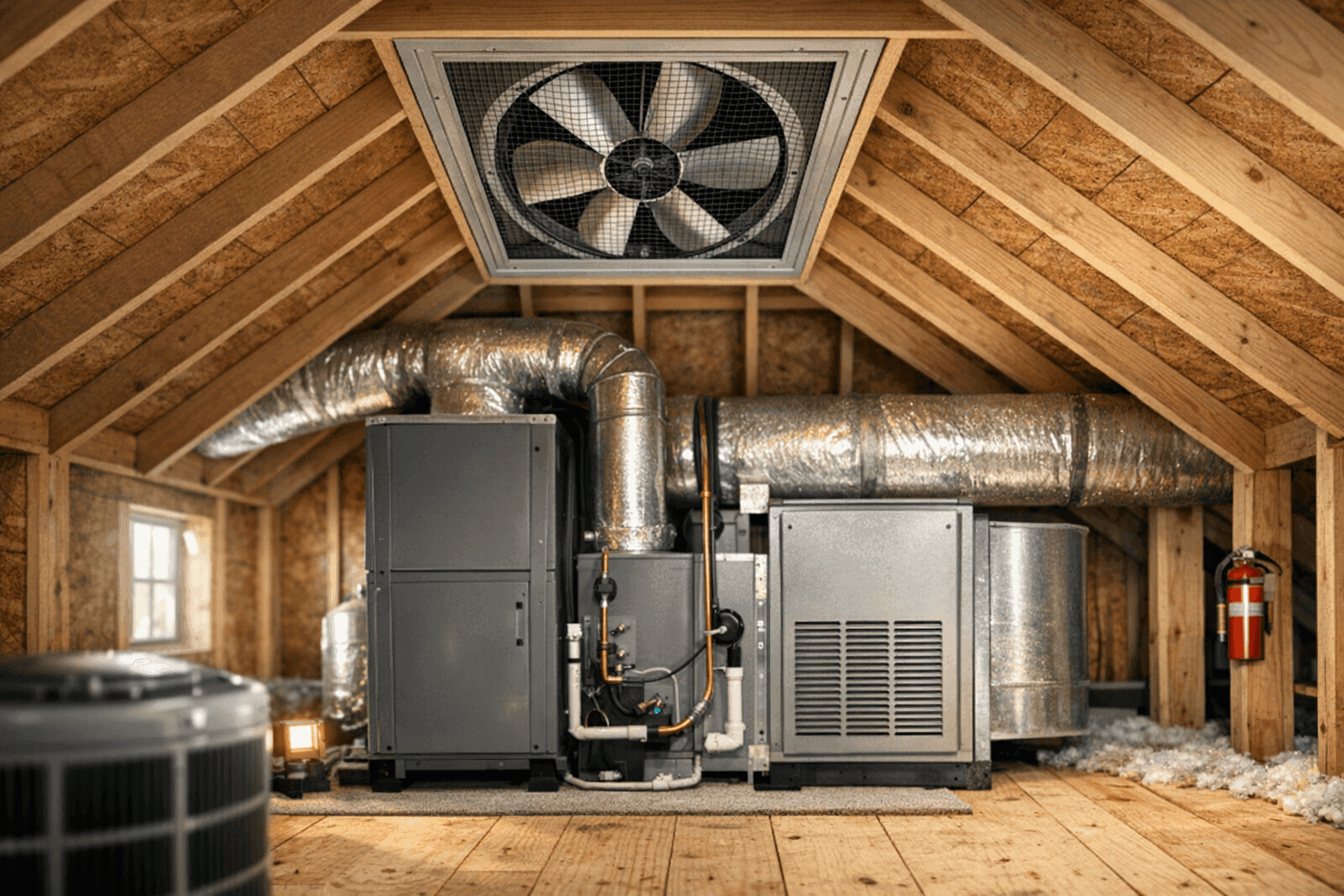
When the temperature climbs, choosing the right cooling solution for your home or business isn’t just about comfort—it's about energy, health, and dollars spent. At Brama Cooling, we know the decision between whole-house fans and air conditioning can feel like standing at a fork in the road with a sweaty brow and a long summer ahead.
Let’s break down the facts, cut through the confusion, and help you find the cooling system that fits your goals, your space, and your budget.
How Whole-House Fans Work 🌀
Imagine opening the windows on a cool evening, letting fresh air sweep through every room. That’s the magic of a whole-house fan. These fans, usually installed in the attic, pull cooler outdoor air inside and push hot, stale air out. It’s like giving your home or office a deep breath.
Key features:
- Pulls air through open windows and exhausts heat through the attic.
- Best used when outdoor temps are lower than indoor temps, typically in the morning or evening.
- Moves large volumes of air fast—think of it as nature’s air exchange.
No fancy refrigerant. No compressors. Just powerful airflow, harnessed for comfort.
How Central Air Conditioning Works
Air conditioning is like a cold drink on a hot day—reliable, precise, and always ready. Central AC uses refrigerant to remove heat and humidity from the air, then circulates the cooled air through ductwork.
Key features:
- Keeps windows closed; air is filtered and dehumidified.
- Delivers consistent, controlled temperatures, day or night.
- Can handle extreme summer heat with ease.
While more complex, AC can be tailored with smart thermostats, zoning, and even air scrubbers for top-tier indoor air quality.
Pros and Cons of Each System
Whole-House Fans
Pros:
- Low energy use compared to AC (U.S. Department of Energy says up to 90% less!).
- Fast fresh-air exchange—great for homes with good outdoor air quality.
- Lower installation and maintenance costs.
- Quiet operation when properly installed.
Cons:
- Only effective when outdoor air is cooler than indoors.
- Won’t control humidity or filter allergens.
- Security risk if windows must remain open.
Air Conditioning
Pros:
- Precise temperature and humidity control.
- Works in any outdoor conditions—rain or shine.
- Filters out pollen and dust (with quality filters).
- Adds value and comfort to properties.
Cons:
- Higher upfront and ongoing energy costs.
- Requires routine maintenance (filters, coils, refrigerant).
- May feel stuffy if not paired with ventilation.
Energy Efficiency Comparison
Energy bills can balloon in summer. Here’s where the numbers matter.
- Whole-house fans: According to the Department of Energy, running a whole-house fan can use as little as one-tenth the energy of central AC. That’s like swapping a marathon for a brisk walk—much less strain on your wallet and the grid.
- AC systems: Modern systems are more efficient than ever (look for ENERGY STAR labels and high SEER ratings), but cooling a whole home still takes significant electricity.
If your climate allows, combining both—using the fan for early cooling and AC for peak heat—can maximize comfort and savings.
Cost: Initial and Long-Term
Whole-House Fans:
- Installation: Lower, often $900–$2,500 depending on home size and setup.
- Maintenance: Minimal—occasional cleaning and checkups.
AC Systems:
- Installation: Higher, often $3,000–$7,500+ for central systems. Ductless mini-splits can vary.
- Maintenance: Regular filter changes, annual inspections, refrigerant checks.
Over a decade, the savings with a whole-house fan can add up—especially if you use AC less.
Maintenance Needs
Whole-House Fan Maintenance
- Clean fan blades and vents seasonally.
- Check electrical connections.
- Inspect attic insulation and sealing.
AC Maintenance
- Change filters monthly or as recommended.
- Schedule annual professional tune-ups for coils, refrigerant, and system safety.
- Clean and clear outdoor condenser units.
Routine care extends the life of your system and keeps your cooling bills in check.
Health and Indoor Air Quality Considerations
A breath of fresh air can be just that—or it can carry pollen, dust, and outdoor pollutants.
Whole-house fans: Great for homes in areas with low outdoor pollution. But if you live near busy roads or during wildfire season, pulling in outside air can be a drawback.
AC systems: Keep windows closed, filter air, and control humidity—reducing mold risk and allergy triggers. For the best results, pair with high-efficiency filters and consider adding air scrubbers or UV lights for extra protection.
If you’re concerned about air quality, professional Indoor Air Quality.
Seasonal and Climate Factors
- Whole-house fans shine in mild, dry climates with cool nights and mornings. Not ideal for muggy, tropical, or consistently hot zones.
- AC is a must in high-humidity, extreme-heat regions—or anywhere you need 24/7 cooling, regardless of outdoor air.
Security and Comfort
It’s a simple tradeoff: whole-house fans need open windows, which can pose a security risk, especially at night or in ground-level spaces. AC keeps your property secure with windows and doors locked tight.
Installation Timeline and Disruption
- Whole-house fans are often installed in a day, with minimal disruption and no major remodels.
- AC installation (especially central systems) can take several days and sometimes requires ductwork modifications.
Have an older home? Mini-splits or ductless systems could be the answer—efficient and less invasive.
Common Mistakes to Avoid
- Whole-house fans: Skipping attic vent upgrades. Without enough vents, heat can get trapped and reduce performance.
- AC systems: Ignoring filter changes or skipping regular professional maintenance. This leads to higher bills and breakdowns.
When to Call a Pro vs. DIY
Some maintenance is DIY-friendly—like changing filters or cleaning fan blades. But for wiring, ductwork, or refrigerant handling, always call a licensed cooling contractor.
Quick Safety Checklist
- Check electrical panels before starting any fan or AC work.
- Confirm attic access is safe and clear.
- Use only properly rated extension cords—never overload circuits.
- For any system, follow local building codes and manufacturer guidelines.
Combining Both for Maximum Comfort
Some homeowners find the sweet spot by combining both systems: use the whole-house fan to cool down quickly in the evening, then let the AC maintain comfort during the hottest parts of the day.
Pairing with smart thermostats can automate things, reducing wasted energy and optimizing comfort—without constant manual controls.
FAQs
Will a whole-house fan work if I have allergies? It depends on your local outdoor air quality. If pollen counts are high, AC with filtration may be better.
How loud are whole-house fans? Modern fans are far quieter than older models. Still, professional installation ensures minimal noise.
Can I install a whole-house fan and keep my AC? Absolutely! Many homes use both for flexibility and savings.
Choosing the Right Solution
So, which is best for you? That depends on your needs, your property, and your climate.
- If you crave fresh air, live in a mild climate, and want to save on energy, a whole-house fan delivers.
- If you need precise temperature and humidity control, or live in a warm, humid area, modern AC is tough to beat.
- For many, the answer is a mix—using both systems to maximize comfort and minimize cost.
If you’re in the Tri-Cities and looking for a cooling company in Richland, Brama Cooling is here to help you weigh every option.
Take the Next Step
Ready to explore whole-house fans, AC installation, or a hybrid approach? Our team can walk you through every detail, from sizing to installation, maintenance, and indoor air quality.
Call Brama Cooling now — or reach us anytime at 888-840-5035 .